FounderMatch
AI-powered B2C · Mobile & Web App
FounderMatch by FounderWay is an AI-powered networking tool designed to connect startup founders, technical talent, and investors, driving networking efficiency through AI-driven matching, targeted networking, and event integration.
I designed an end-to-end, trust-driven matching system, that transformed networking into a more transparent experience.
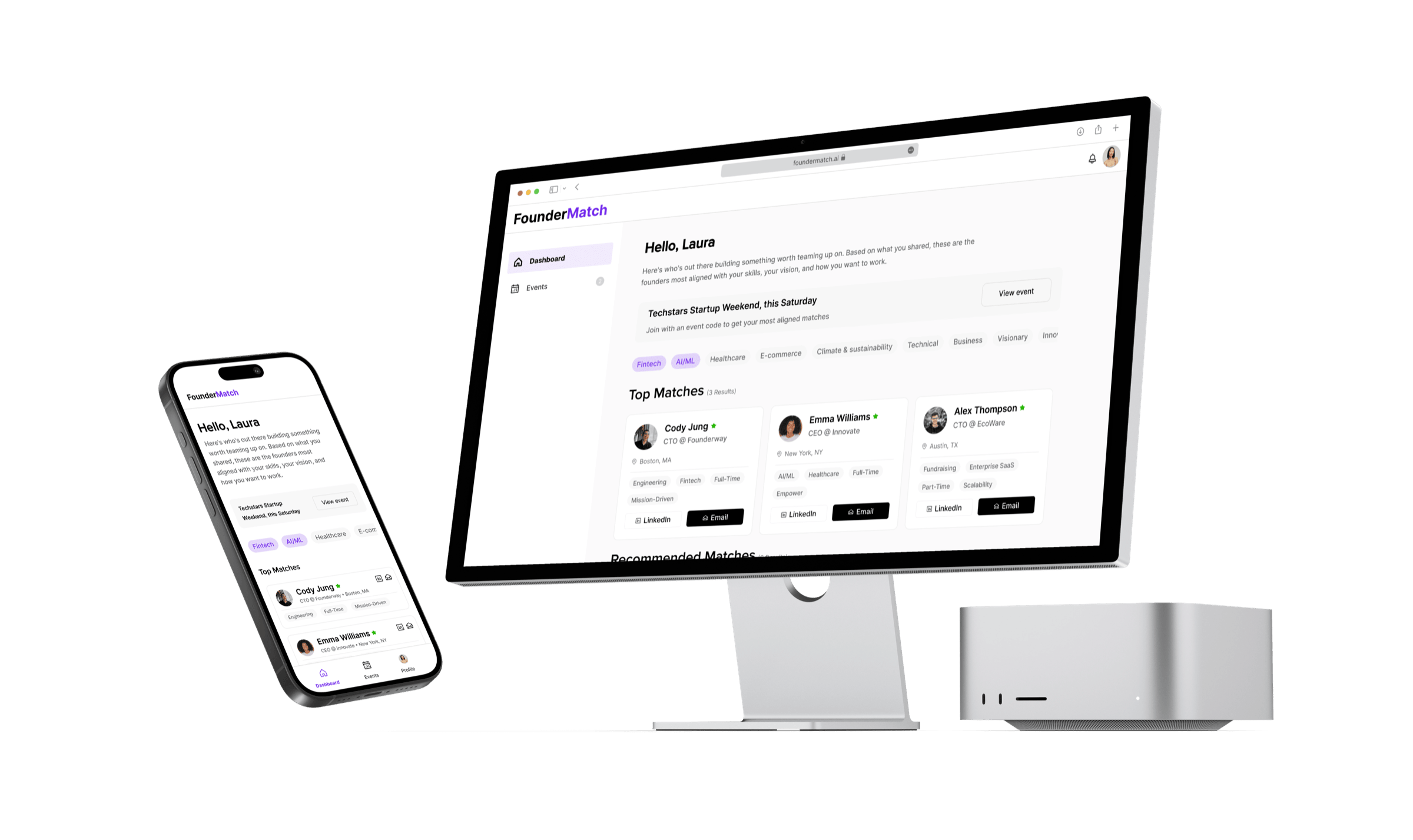
250+ founders onboarded in 72 hours of launch
Finding a co-founder still comes down to luck
For startup founders, finding the right co-founder is tough. They reach out through scattered connections, with no structured way to know who's actually the right fit. It's slow, inefficient, and rarely leads to real alignment.
This journey is slow, inefficient, and rarely leads to real alignment
Skills weren't the hard part
Assessing commitment and vision was. Even when founders found someone with the right skills, evaluating long-term alignment took months of informal back-and-forth, with no guarantee.
Months of hard work finding nothing
A digital match alone didn't feel real
Founders didn't trust a cold, algorithm-generated connection, no matter how compatible it claimed to be. Without a shared, real-world context, a match felt like a guess dressed up as data.
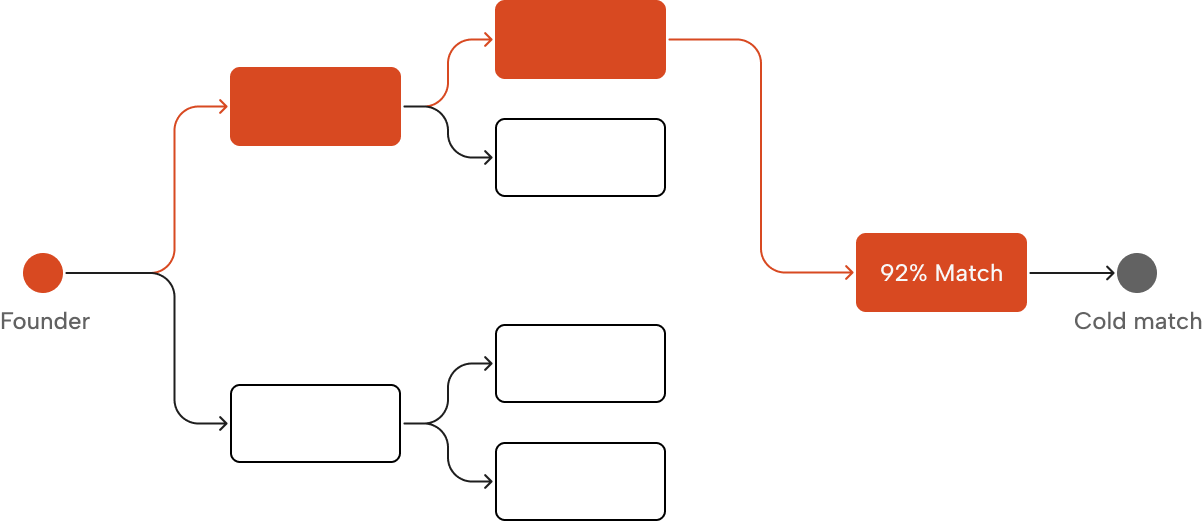
A high score, still strangers
“The challenge wasn't building a better matching algorithm, it was designing an experience founders could trust.”
One flow, personalized to intent
Founders arrived with different intents: building their own idea, joining someone else's, or just exploring.
Everyone completed the same core inputs, but the flow adapted based on why they were on the platform, so the data feeding the algorithm stayed intentional without asking anyone to sit through steps that didn't apply to them.
A reason, not a ranking
That intentional data didn't just shape onboarding, it shaped what founders saw next. Rather than one long list to sort through, the highest-compatibility matches gave founders a starting point, along with the rest of their most aligned profiles and reasons instead of a score to judge it by.
Matching, scoped to who's actually in the room
A cold, algorithm-only match didn't feel trustworthy on its own.
Matching only within a specific event's attendee list, virtual or in-person, meant founders were never paired with a stranger from platform-wide pool, only with people also actually attending that same event.
Making the algorithm legible
The matching engine scored founders on skills, vision, industry, and commitment, in a way only the algorithm understood. My job was deciding what it should say out loud.
Working with engineers, I surfaced the specific overlapping attributes behind each match, not a single abstracted score, so founders had a transparent reason to trust it.
The algorithm's reasoning, made visible
A card that earned trust, not just showed a match
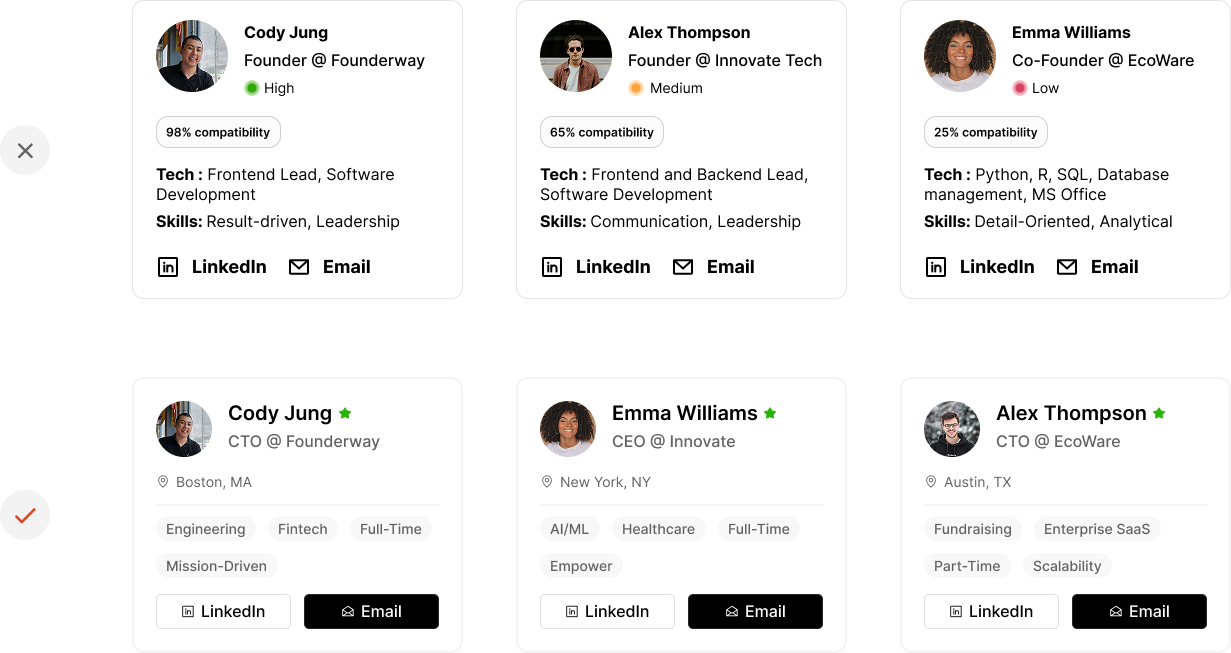
My first instinct was a compatibility score. Testing killed it fast. The card now shows the specific reasons behind every match, so founders judge fit for themselves, building real trust in what the AI surfaced.
Mobile first, on purpose, not by adaptation
Someone's first match likely arrived on their phone, mid-event. Designing for that smallest, most distracted screen first forced the real hierarchy questions. Web inherited those priorities.
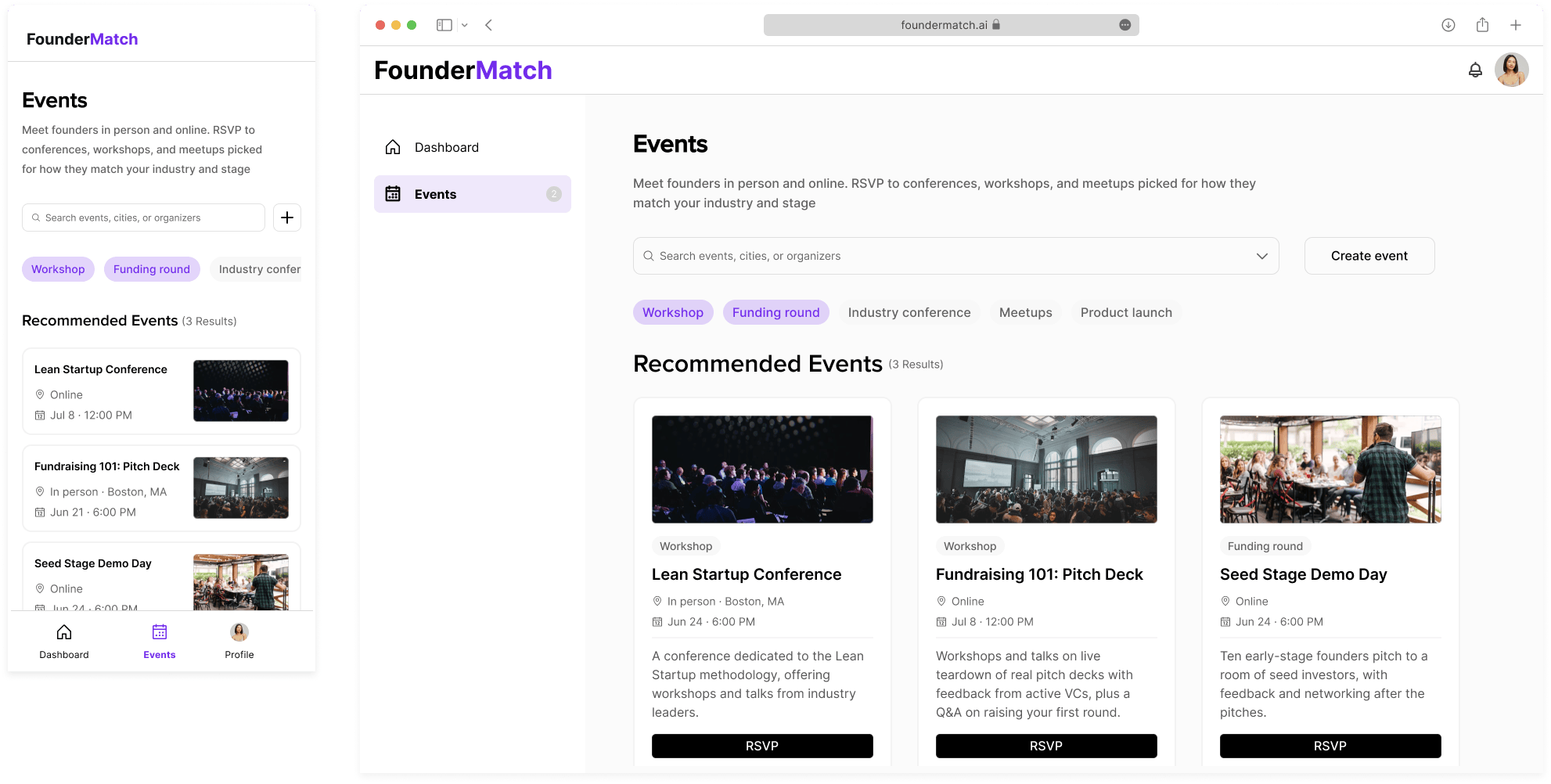
Why this mattered
Solo founders were building alone by default, not by choice, and every existing tool optimized for the easiest thing to filter on, skills, while ignoring what founders said mattered most.
Understanding what founders actually needed
I had my own assumptions about why founders were struggling to find a co-founder, but the only way to actually test them, rather than design around a guess, was to ask founders directly.
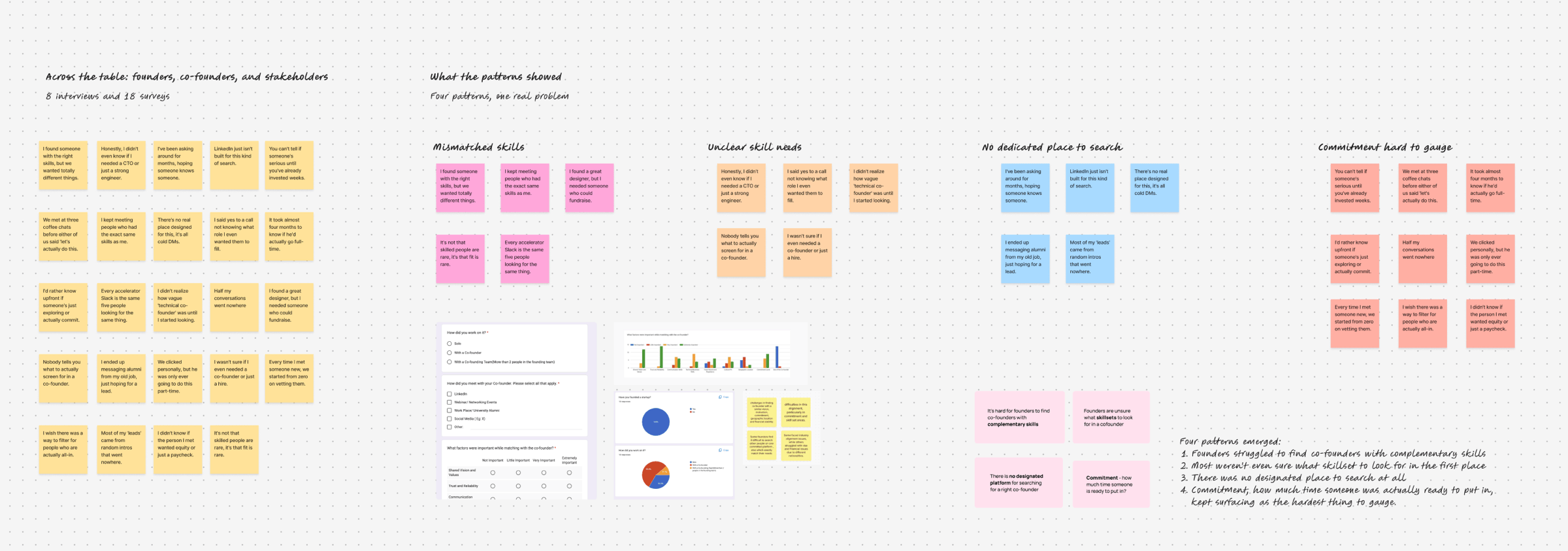
- •Found people, but the skills didn't complement their own
- •Didn't know what skillset to look for
- •No dedicated place to search
- •Commitment nearly impossible to gauge
Scoping before the interface
Sat with our PM and engineers to prioritize the MVP scope and map the product end to end, that structure set the boundaries for everything that follows.
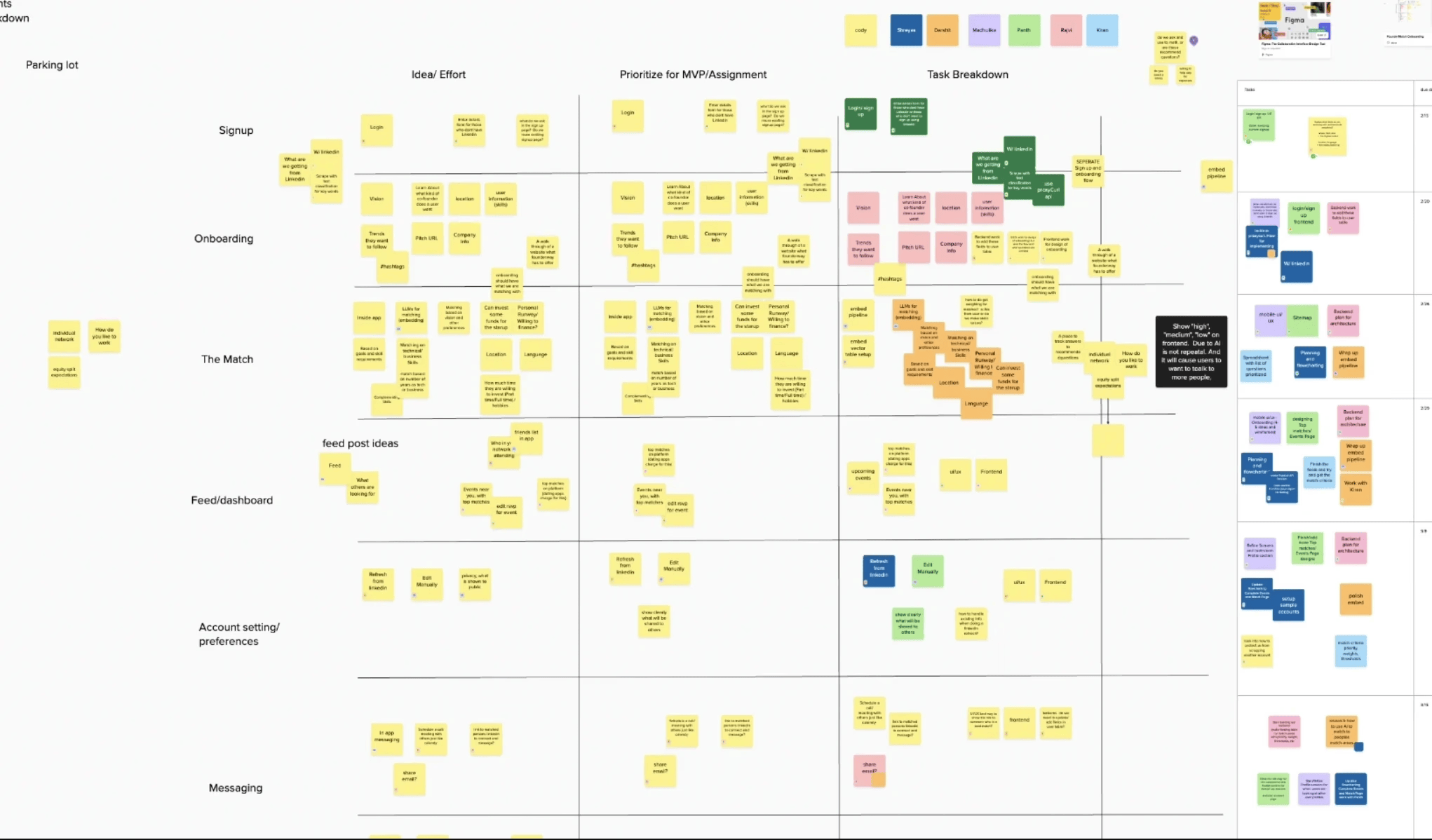
Weighing ideas against what we could actually build
Working closely with engineers and founders, I brought ideas to the table and stress-tested them against real constraints, what was technically feasible, what fit the timeline, and what actually served the product, before any screens got designed.
Keeping onboarding in our control
- ✓Manual entry with inline validation gave us a reliable onboarding flow
- ✓No reliance on external APIs or third-party services
- –LinkedIn autofill was limited by API access and scraping restrictions
- –Not practical for the first MVP release
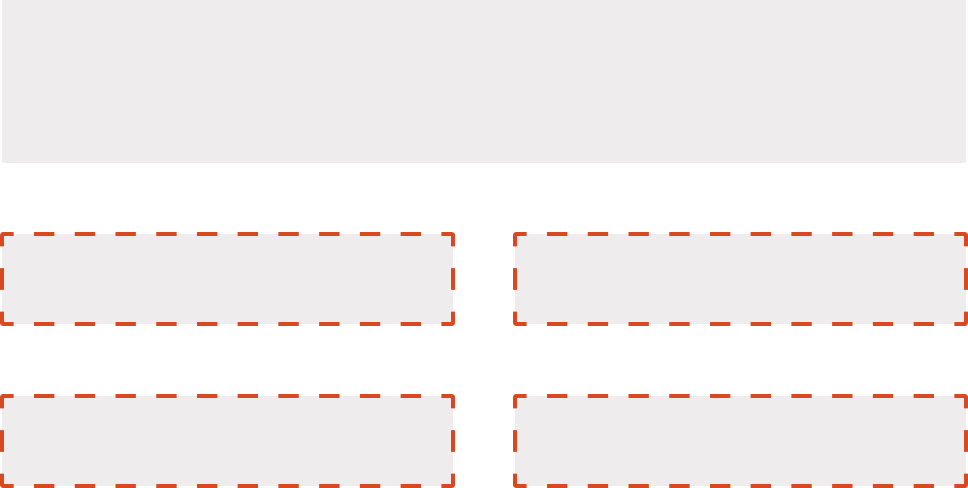
Information Density vs. Scannability
- ✓Prioritize high-signal match attributes over complete profile data
- –Normalized onboarding responses into four scannable compatibility tags
- –Moved lower-priority details to the profile to keep cards lightweight
Exploring the solution space
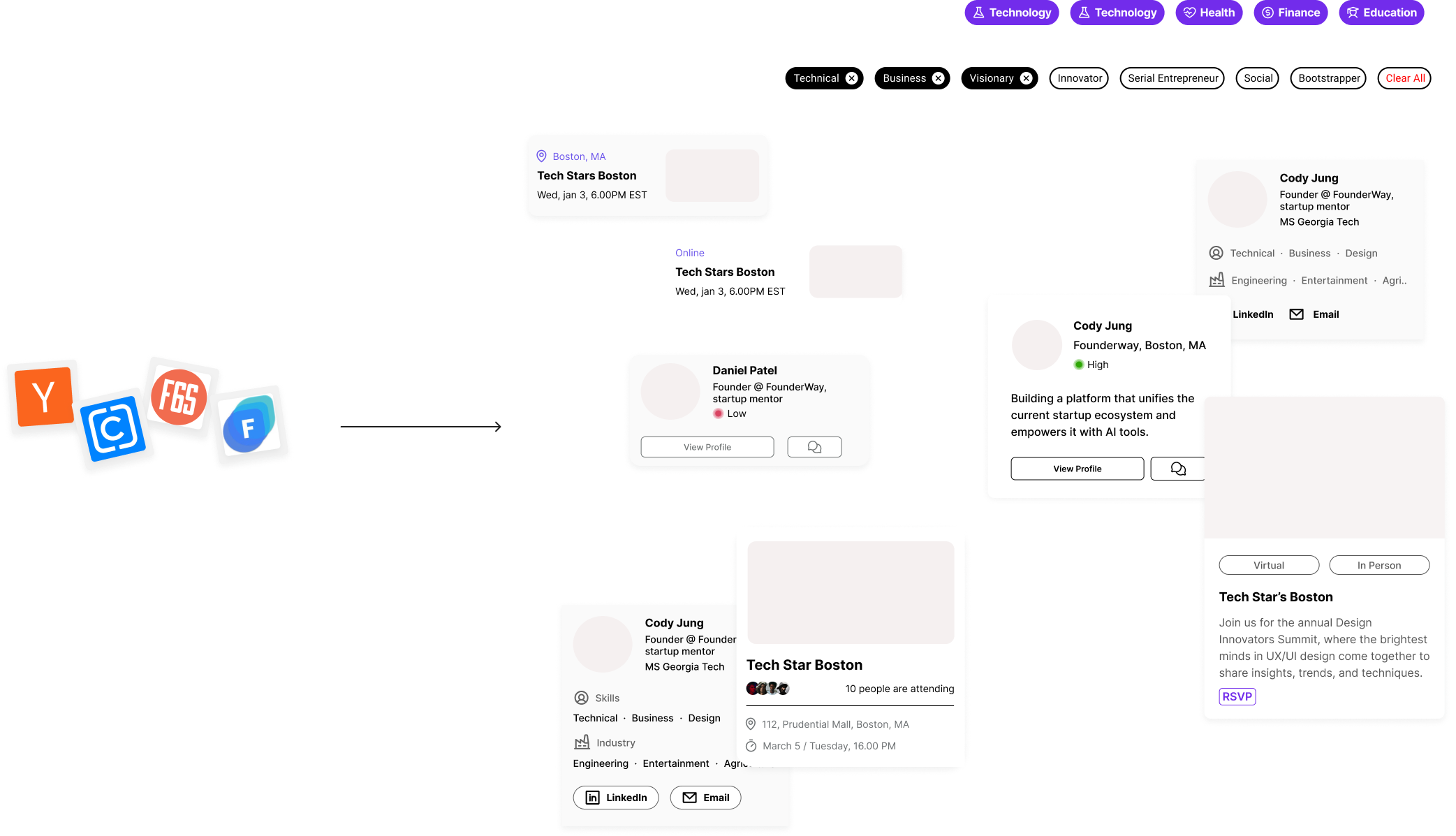
With those constraints set, I explored many many card layouts, score-display formats, and looked at how existing tools approached this problem.
Design meets its first skeptics
After ideating through more variations than I'd like to admit, I pulled the strongest pieces into one prototype, ready to put in front of real founders and the founding team.

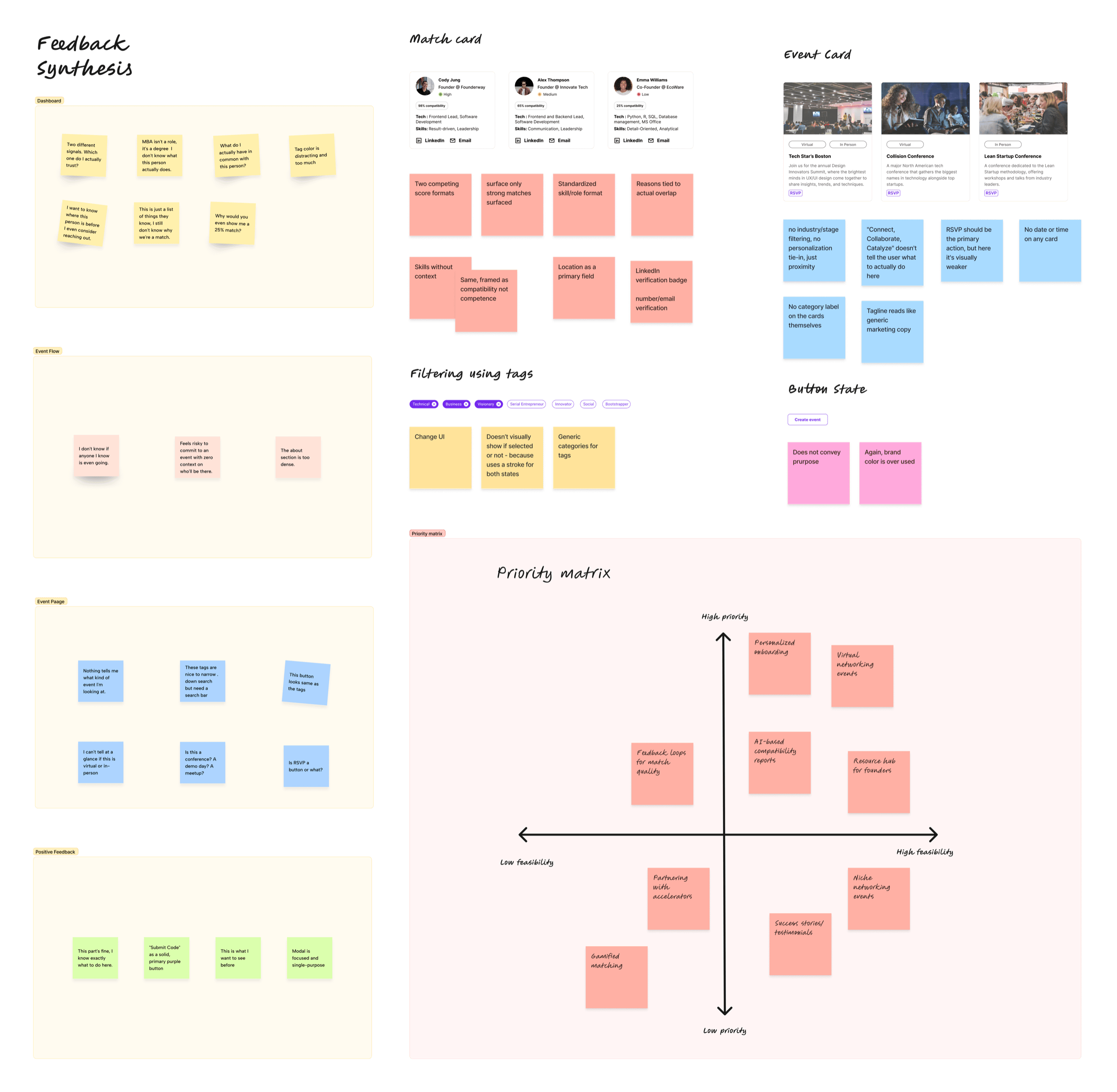
- •Matches felt relevant, but the reasoning wasn't clear.
- •Compatibility scores created comparison instead of confidence.
- •Location was essential to judge whether a connection was realistic.
Addressing feedback
Each gap became a fix: scores gave way to the actual reasons behind a match, location became a primary field, and only the strongest matches were shown at all. These changes are what made the product trustworthy, not just functional.
- •Scores gave way to the actual reasons behind a match.
- •Location became a primary field on every card, so feasibility was clear upfront.
- •Only the strongest matches were shown at all, so there was nothing left to compare, only someone to reach out to.


A platform that goes beyond skills
The final experience focused on making AI matching feel transparent, showing why a match existed, not just how good it was, and grounding it in real events instead of an anonymous pool. Founders needed an algorithm they could understand, not one they had to trust blindly.
What got delivered
- •250+ founders onboarded within 72 hours at launch, presented at Harvard Innovation Center, Techstars Startup Weekend Boston 2024
- •80% task success rate across onboarding and matching, tested with 18 founders
Key Learnings
- •Designing for AI meant designing for uncertainty. The hardest part wasn't the interface, it was helping people trust something that wasn't always black and white.
- •I stopped asking Can we build this? and started asking Should we build this? Constraints usually led to better ideas anyway.
- •AI doesn't always have one right answer, so neither does the UX. I learned to design for confidence, not certainty.